LibreYOLO showed up at CVPR 2026

LibreYOLO showed up at CVPR 2026.
CVPR is widely recognized as the most prestigious computer vision conference in the world. This year it was in Denver, and a team from Jabra and the IT University of Copenhagen ran a tutorial there called "Edge AI in Action: Mastering On-Device Inference". They picked LibreYOLOXs as their example model for getting object detection onto edge chips.
What they built
The tutorial walked the full edge pipeline, end to end. Start with a LibreYOLOXs model. Export it to ONNX. Then compile that ONNX down to two very different pieces of hardware: a Hailo-8L accelerator, and Qualcomm Snapdragon.
Real-time on a Hailo-8L
They compiled the ONNX to a HEF with the Hailo Dataflow Compiler, then ran it on a Raspberry Pi 5 with the Hailo-8L AI HAT.
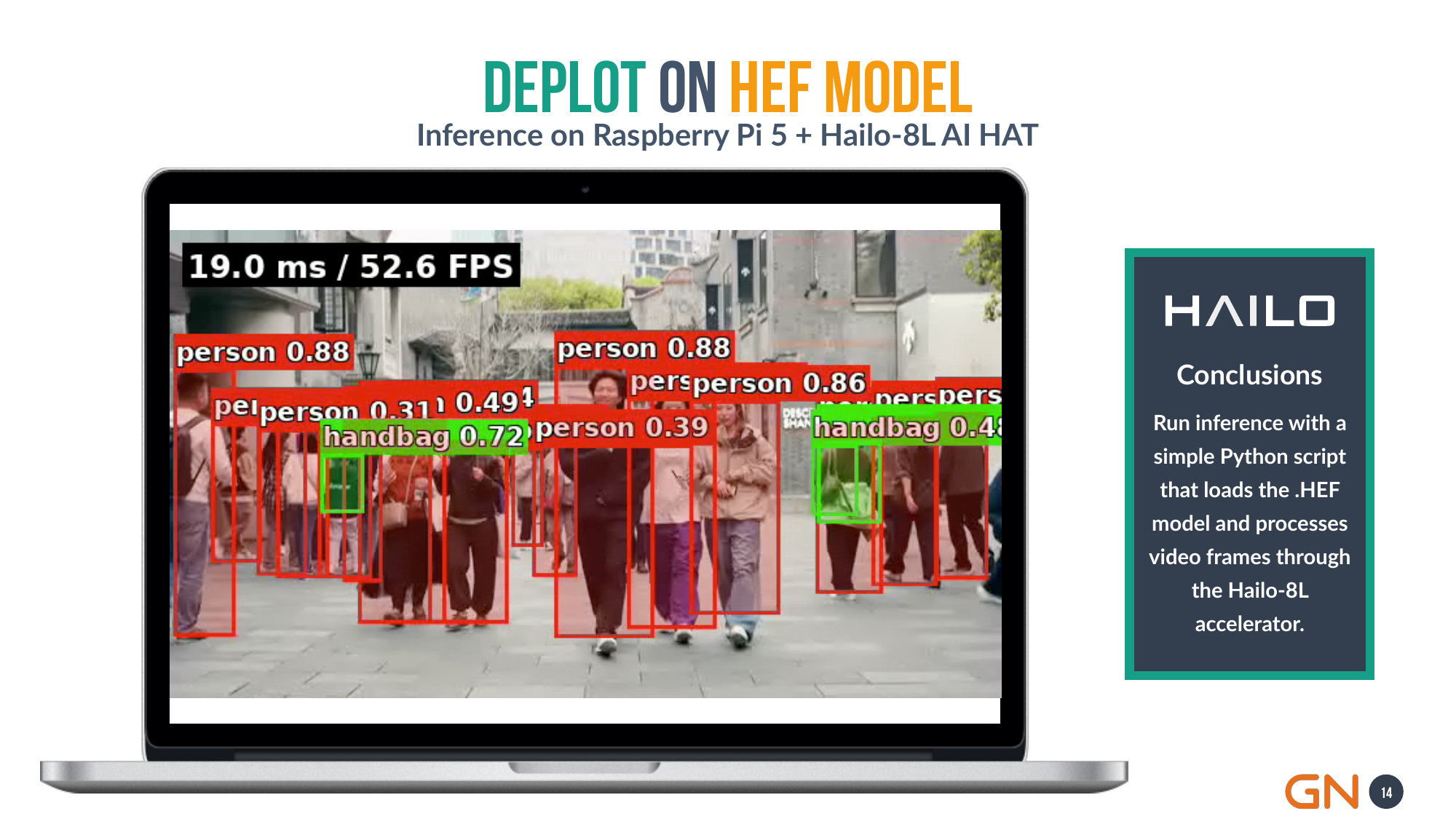
It ran at 19.0 ms per frame, 52.6 FPS, on a Raspberry Pi.
Real-time on Snapdragon
On the Qualcomm side they quantized LibreYOLOXs to INT8 and ran it through the SNPE, QAIRT, and AI Hub stack, benchmarked on a QCS6490.
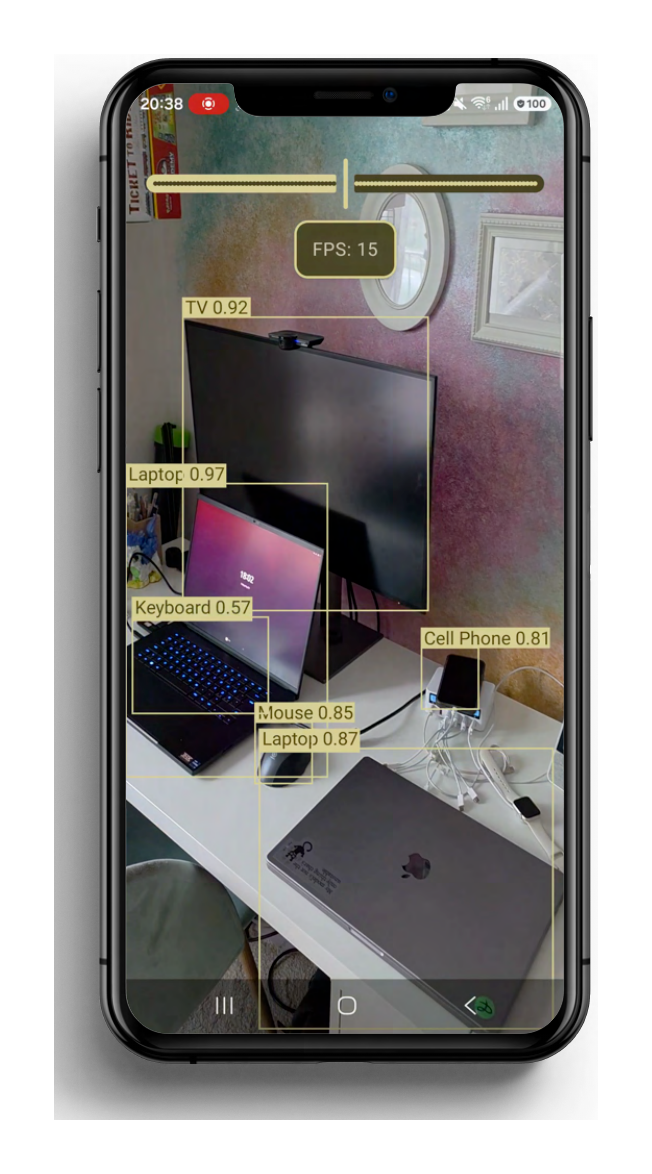
It came in at 6.69 ms on the HTP/DSP.
Thank you
Huge thanks to Sai Narsi Reddy Donthi Reddy, Fabricio Batista Narcizo, Elizabete Munzlingera, and Shan Ahmed Shaffi for featuring the project.
- Tutorial and slides: Edge AI in Action: Mastering On-Device Inference
- Qualcomm-quantized LibreYOLOXs models: on Hugging Face
Try it
pip install libreyolo
from libreyolo import LibreYOLO

model = LibreYOLO("LibreYOLOXs.pt")
model.export(format="onnx")   # then compile for your edge target
LibreYOLO is MIT-licensed, runs on Linux, Mac, and Windows, and works on GPU, Apple Silicon, and plain CPU with no code change. One API spans YOLOX, RF-DETR, D-FINE, DEIM, YOLO-NAS, segmentation, pose, depth, and more.
Star it on GitHub: github.com/LibreYOLO/libreyolo | Docs: libreyolo.com/docs