Research & Science

Built for Discovery

A codebase designed for researchers, not just users. Modify freely, inspect deeply, and publish without paying for the privilege.

No "Research License" Required

Some frameworks charge separate fees for "research" or "science" licenses just to let you inspect the code without releasing your work. Libre-YOLO doesn't.

Typical "Science Licenses"

  • Pay to keep research private
  • Fees for commercial R&D use
  • Complex license tiers
  • Legal review for publication

Libre-YOLO (MIT)

  • Investigate freely, keep it private
  • Zero fees for any use case
  • One simple license: MIT
  • Publish without legal concerns
Native Explainability

See Inside the Black Box

Built-in tools for interpretability and explainability. No external dependencies, no complex setup—just flags and function calls.

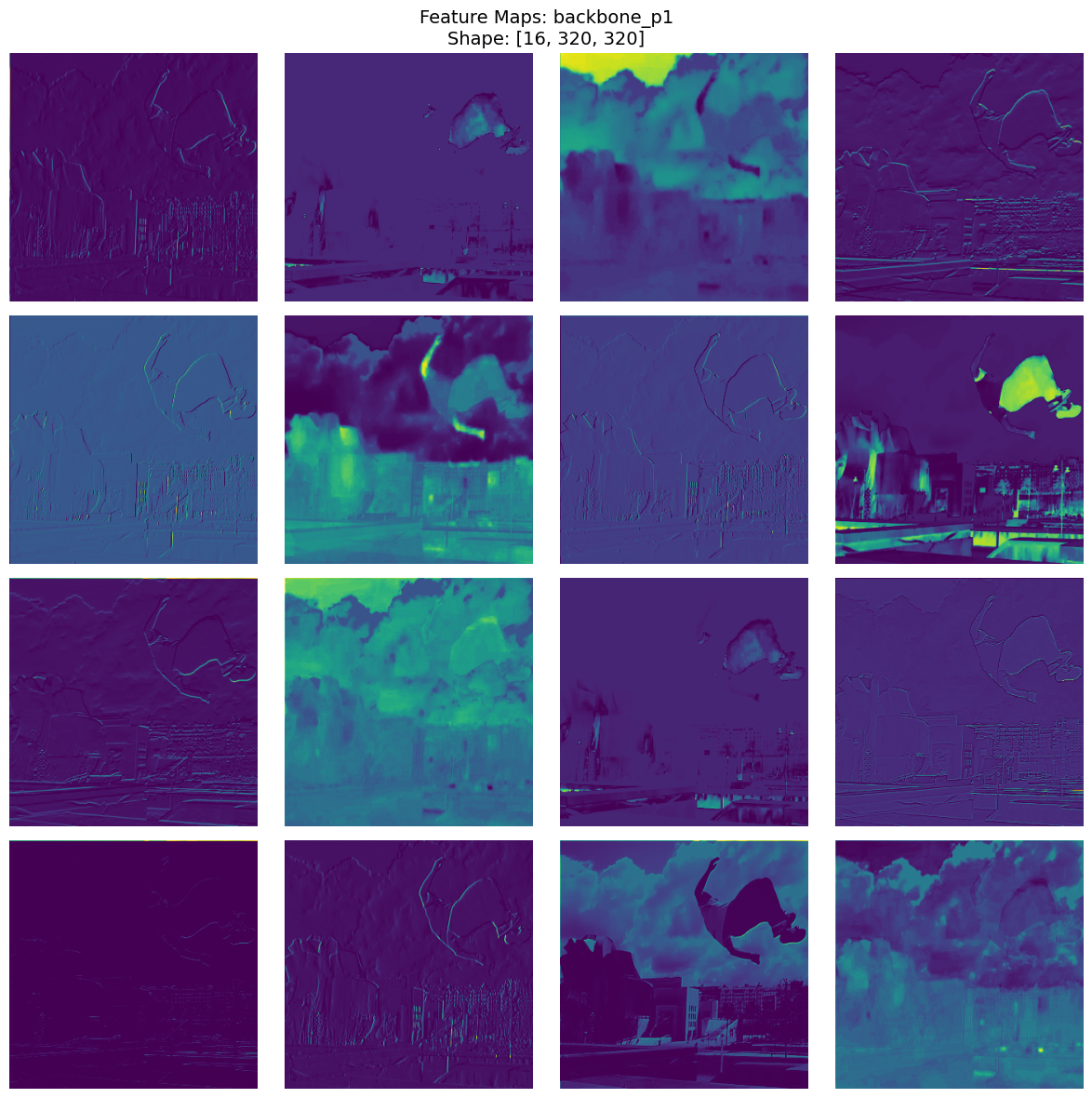
Feature Map Extraction

One flag. That's all it takes to save intermediate activations from every layer. Perfect for understanding what your model "sees" at each stage.

  • Backbone, neck, and head layers
  • Automatic organization by layer type
  • NumPy arrays for easy analysis
feature_maps.py
from libreyolo import LIBREYOLO

model = LIBREYOLO("yolov11m.pt")

# One flag to save all feature maps
results = model.predict(
    "image.jpg",
    save_feature_maps=True  # That's it!
)

# Feature maps saved to runs/detect/exp/feature_maps/
# Organized by layer: backbone/, neck/, head/

Explainability Toolbox

Native implementations of GradCAM, saliency maps, and SHAP explanations. No pip installing extra packages or fighting version conflicts.

GradCAM
Saliency
SHAP
CAM
Guided
Occlusion
explainability.py
from libreyolo import LIBREYOLO
from libreyolo.explain import GradCAM, SaliencyMap, SHAP

model = LIBREYOLO("yolov11m.pt")

# GradCAM visualization
gradcam = GradCAM(model, target_layer="backbone.layer4")
heatmap = gradcam.generate("image.jpg", class_idx=0)
gradcam.visualize(heatmap, save="gradcam_person.png")

# Saliency maps
saliency = SaliencyMap(model)
saliency.compute("image.jpg", save="saliency.png")

# SHAP explanations
shap_explainer = SHAP(model)
shap_explainer.explain("image.jpg", save="shap_values.png")

Attention Visualization

For transformer-based architectures, extract and visualize attention weights to understand which regions the model attends to.

  • Per-head attention maps
  • Cross-attention & self-attention
  • Publication-ready visualizations
attention.py
from libreyolo import LIBREYOLO

model = LIBREYOLO("yolov11m.pt")

# Extract attention weights (for transformer-based models)
results = model.predict(
    "image.jpg",
    extract_attention=True
)

# Access attention maps per head
for layer, attn in results[0].attention_maps.items():
    print(f"{layer}: {attn.shape}")  # [heads, H, W]
    
# Built-in visualization
results[0].plot_attention_heads(save="attention_heads.png")
Readable Architecture

One File Per Model

No more hunting through labyrinthine file structures. Each model architecture lives in a single, self-contained file.

Typical Framework Structure

standard_framework/
├── nn/
│   ├── modules/
│   │   ├── block.py      # 500+ lines
│   │   ├── conv.py       # Where is C2f?
│   │   ├── head.py       # Multiple classes
│   │   └── transformer.py
│   └── tasks.py          # 1000+ lines
├── models/
│   ├── yolo/
│   │   ├── detect/
│   │   │   ├── train.py
│   │   │   └── val.py
│   │   └── model.py
│   └── ... 
└── # Good luck finding what you need

Fragmented across dozens of files. Imports from everywhere. Modifying one thing breaks another.

Libre-YOLO Structure

libreyolo/
├── models/
│   ├── yolov8.py         # Complete v8 model
│   ├── yolov11.py        # Complete v11 model
│   └── yolov12.py        # Complete v12 model
├── notebooks/
│   ├── yolov8.ipynb      # Interactive v8
│   ├── yolov11.ipynb     # Interactive v11
│   └── explainability.ipynb
├── explain/
│   └── toolbox.py        # All XAI methods
└── # Find anything in seconds

Each model is self-contained. Modify YOLOv11 without touching v8. Jupyter notebooks for interactive exploration.

Python Files

One .py file per architecture. Everything you need to understand or modify in one place.

Jupyter Notebooks

Interactive notebooks for each model. Run cell-by-cell, visualize outputs, experiment freely.

Easy to Fork

Want to create YOLOv11-Custom? Copy one file, modify, done. No dependency spaghetti.

Designed for Modification

Want to test a new backbone? Experiment with a custom attention mechanism? Add a novel loss function? The clean architecture makes modifications straightforward.

Modify Without Fear

  • Isolated Changes

    Modify YOLOv11 without affecting YOLOv8. Each model is independent.

  • Clear Inheritance

    Simple class hierarchy. Override what you need, inherit the rest.

  • No License Barriers

    Your modifications stay private. No fees to keep your research confidential.

For researchers: Publish papers using modified Libre-YOLO architectures. No "science license" needed. Just cite the project and publish freely.

yolov11_custom.py
# yolov11_custom.py - Your modified architecture

from libreyolo.models.yolov11 import YOLOv11

class YOLOv11Custom(YOLOv11):
    def __init__(self):
        super().__init__()
        # Swap out the backbone
        self.backbone = MyCustomBackbone()
        
    def forward(self, x):
        # Add your custom logic
        features = self.backbone(x)
        
        # Maybe add a custom attention layer?
        features = self.custom_attention(features)
        
        return self.head(self.neck(features))

# That's it. Train it:
model = YOLOv11Custom()
model.train(data="my_dataset.yaml")

Start Your Research Today

No license fees. No paywalls. No restrictions on keeping your work private. Just install and start exploring.

$ pip install libreyolo